The assumption: not more news, but local meaning at the right moment.
Case 05 · Hypothesis-led concept
Bayn SignalSee change coming.Before you feel its impact.
A testable platform hypothesis for expats, migrants and residents who may not need more news, but the right local signal at the right moment.
The 30-second case
Problem. Solution. Next step.
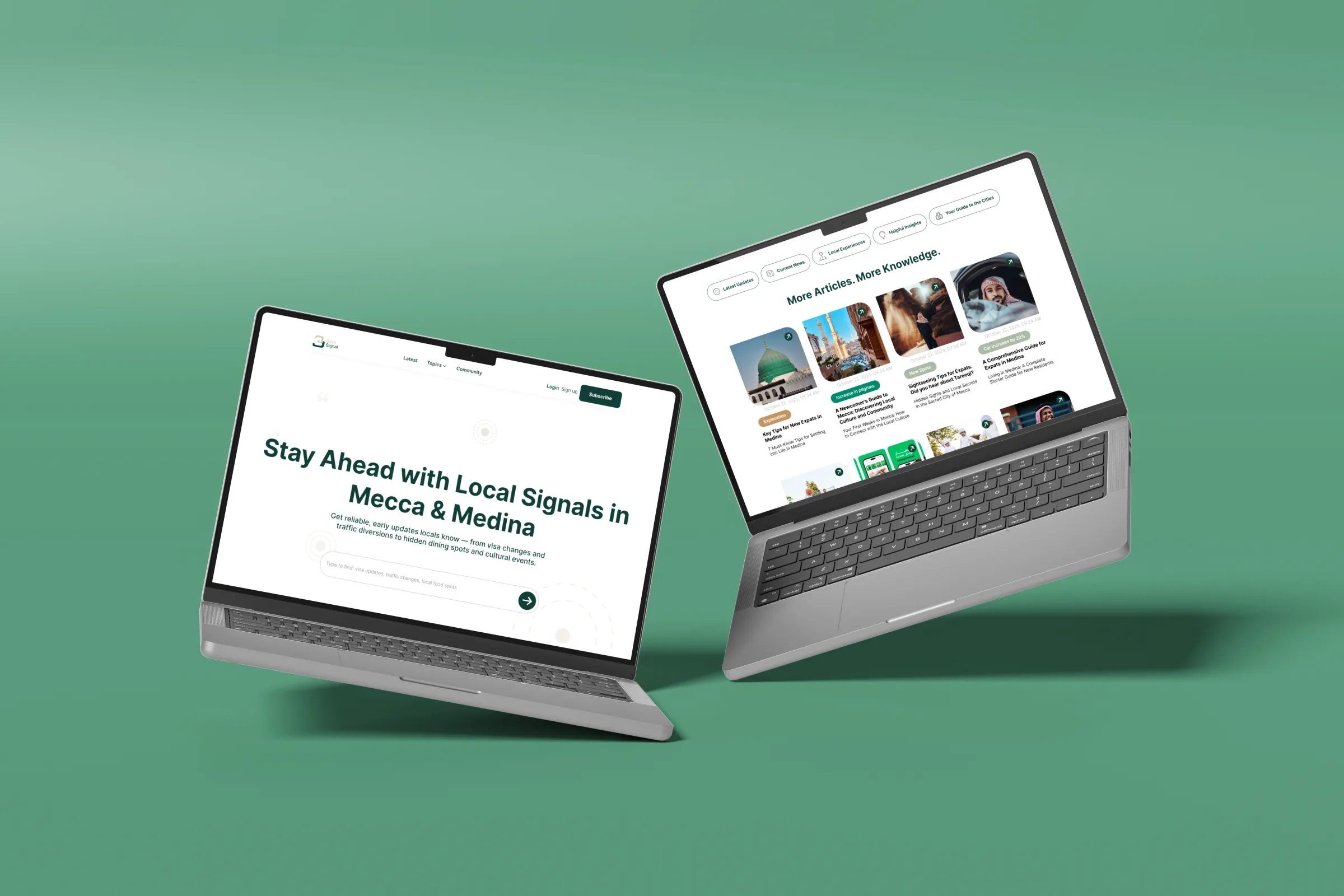
The interface lets people scan first, understand what matters and then explore the detail when they need it.
The screens are the hypothesis. Understanding, trust and useful action are what need to be measured.
Research layer · assumptions made explicit
The audience is a hypothesis. The next research round must earn its specificity.
The first persona exercise mixed needs with solution ideas. I therefore do not present it as evidence; I translate it into three assumptions that can be tested separately.
No primary research yet · assumptions visible · journey intentionally postponedNew resident
- Hypothesis
- needs one trusted place for rules and everyday life
- Designed response
- signals by life moment with source, time and action
- Proof needed
- interviews about recent decisions and sources used
Time-poor professional
- Hypothesis
- only wants updates that affect work or family today
- Designed response
- a personal pulse by topic, location and urgency
- Proof needed
- card sort and information task for speed and comprehension
Family in transition
- Hypothesis
- must quickly understand how changes affect children and planning
- Designed response
- family context, local guides and concrete next steps
- Proof needed
- contextual usability test with a recent rule or route change
Why there is no journey here
Without field research, an emotional curve would be invented. Bayn first needs interviews around real relocation and local-information moments; only then can a current-state journey honestly connect friction to design decisions.
0103
The starting hypothesis
Moving is one decision. Settling in takes a thousand more.
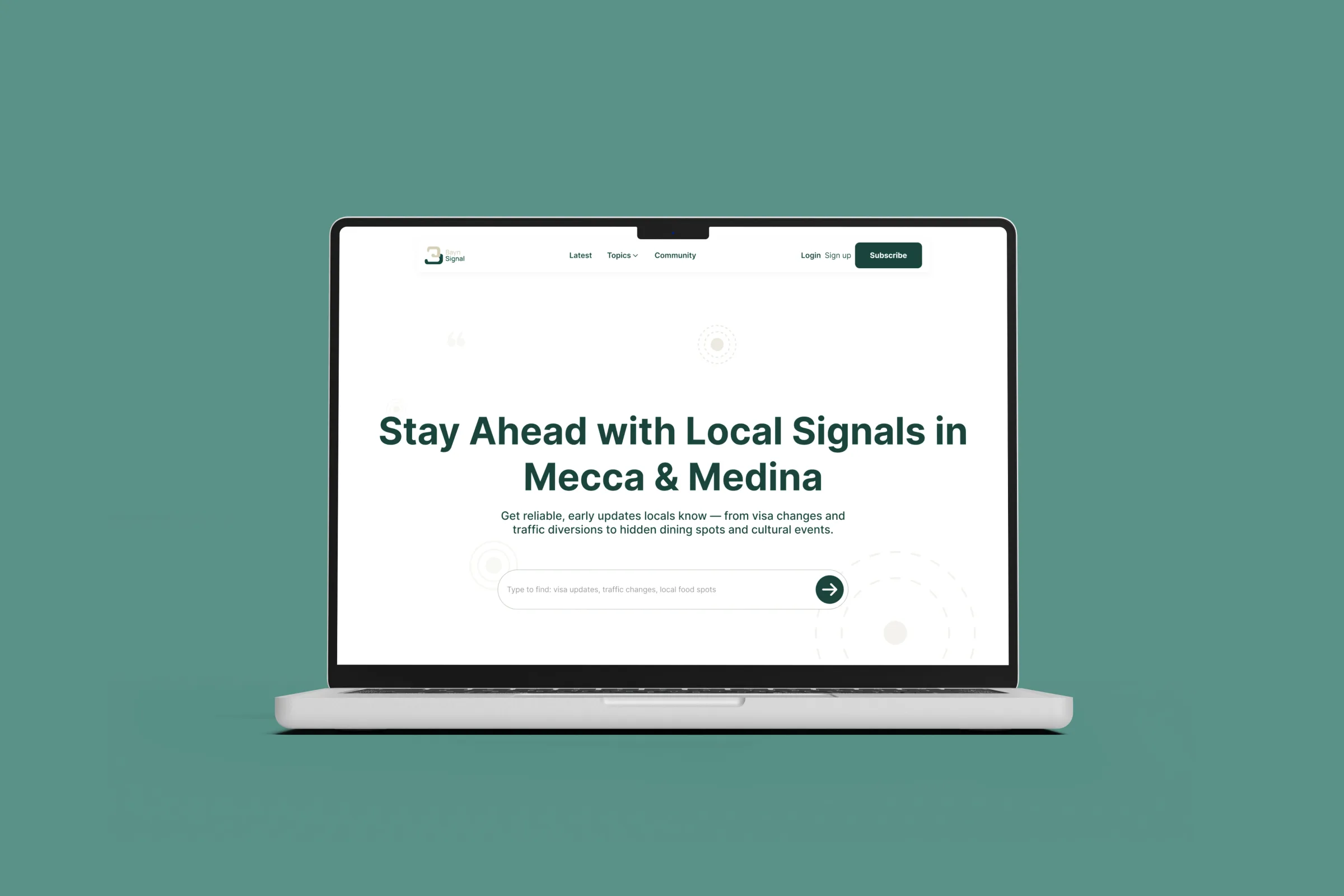
The case starts with the hypothesis that new residents seek daily answers about visas, traffic, healthcare, housing and local behaviour, while general news feeds are too broad or lack the context needed for a concrete decision.
The assumption: not more news, but local meaning at the right moment.
0203
The product hypothesis
News tells you what happened. A signal tells you what it changes for you.
Bayn Signal explores the possible space between formal reporting and scattered community tips. The concept combines speed, transparent sourcing and first-hand knowledge; research must still determine whether that makes information useful sooner.
Relevance comes before volume: every signal should help someone make a better decision or take a clearer next step.
0303
The solution direction
One local pulse for settling in, getting things done, getting around, living and connecting.
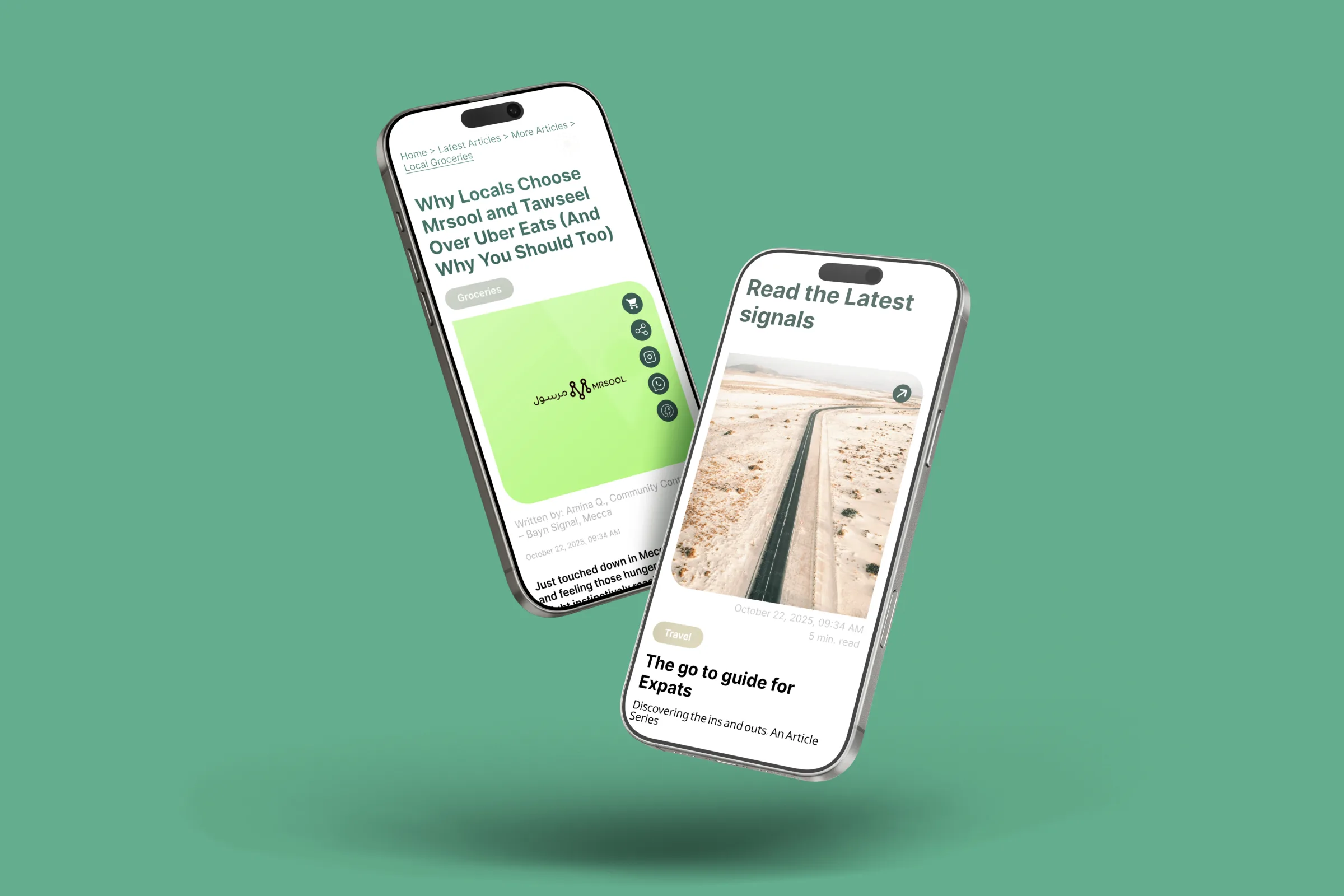
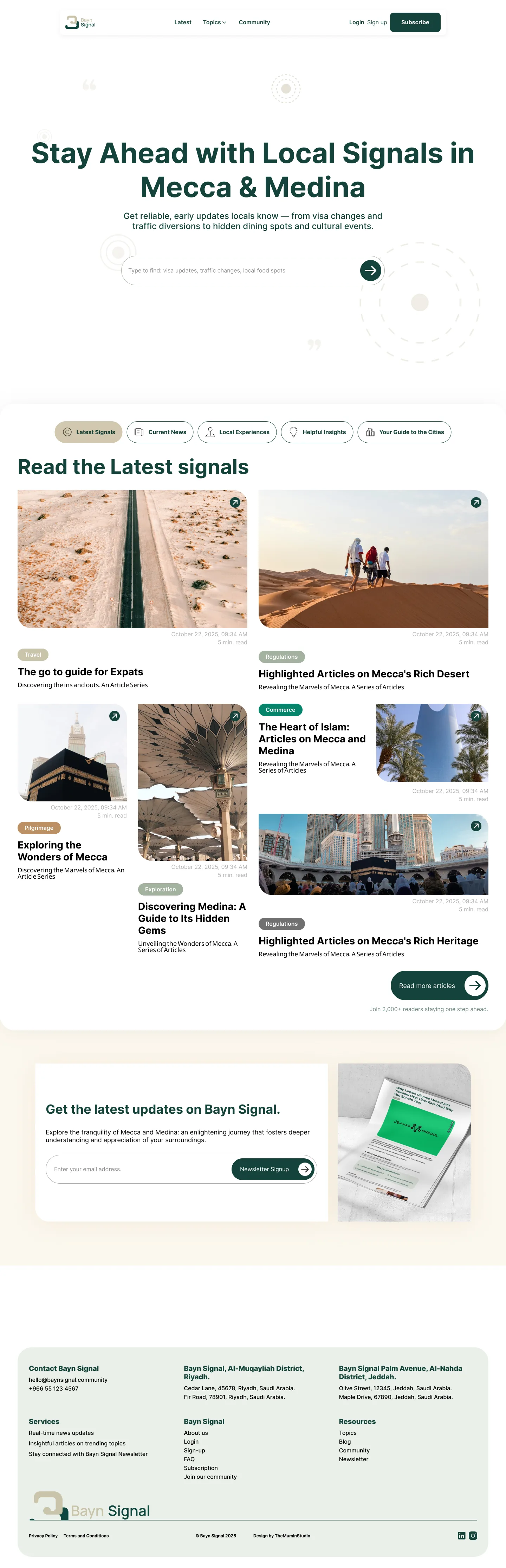
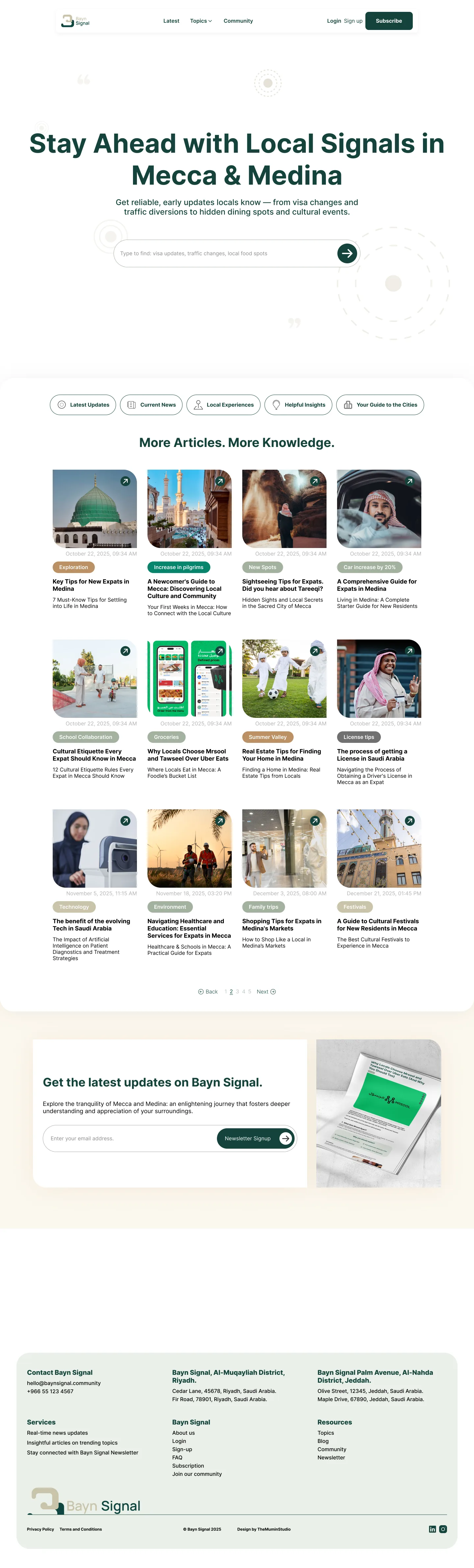
Instead of an endless chronological feed, the experience organises articles, short updates and community insights around real moments in everyday life. Topic, location, timing and urgency make it clear why an update matters before it is opened.
The interface lets people scan first, understand what matters and then explore the detail when they need it.
A pulse at a glance Early signals Real-life context
Optional deep diveExplore the decisions behind the solutionOpen this section for the supporting product logic, visual system and validation questions.
Product logic
The context should sit beside the claim, not behind another click.
Every signal shows its source, publication time, local reach and practical impact. In-depth articles combine explanation, comparisons and residents’ experiences, so speed never comes at the expense of trust.
A calm system makes urgent information easy to recognise without making every update feel like an alarm.
The visual system
A calm information layer, with green used to signal direction and trust.
Deep Green anchors the identity and gives actions enough contrast. Signal Green marks timely information, while Light Sage and Warm Beige keep long articles feeling open. The typography stays clear and compact so content always comes before decoration.
The visual voice feels local and helpful, never distant like traditional news or noisy like social media.
What still needs to be proven
The concept makes relevance easy to scan. Real users still need to show which signals genuinely help them act.
Bayn Signal is a self-initiated design vision, not a launched client product. The next step is to test which sources earn trust, whether the categories are understood quickly enough and whether a personal pulse helps people take the right action sooner.
The screens are the hypothesis. Understanding, trust and useful action are what need to be measured.
Core journeys / designed across every screen size
Notice it.
Understand it.
Act on it.
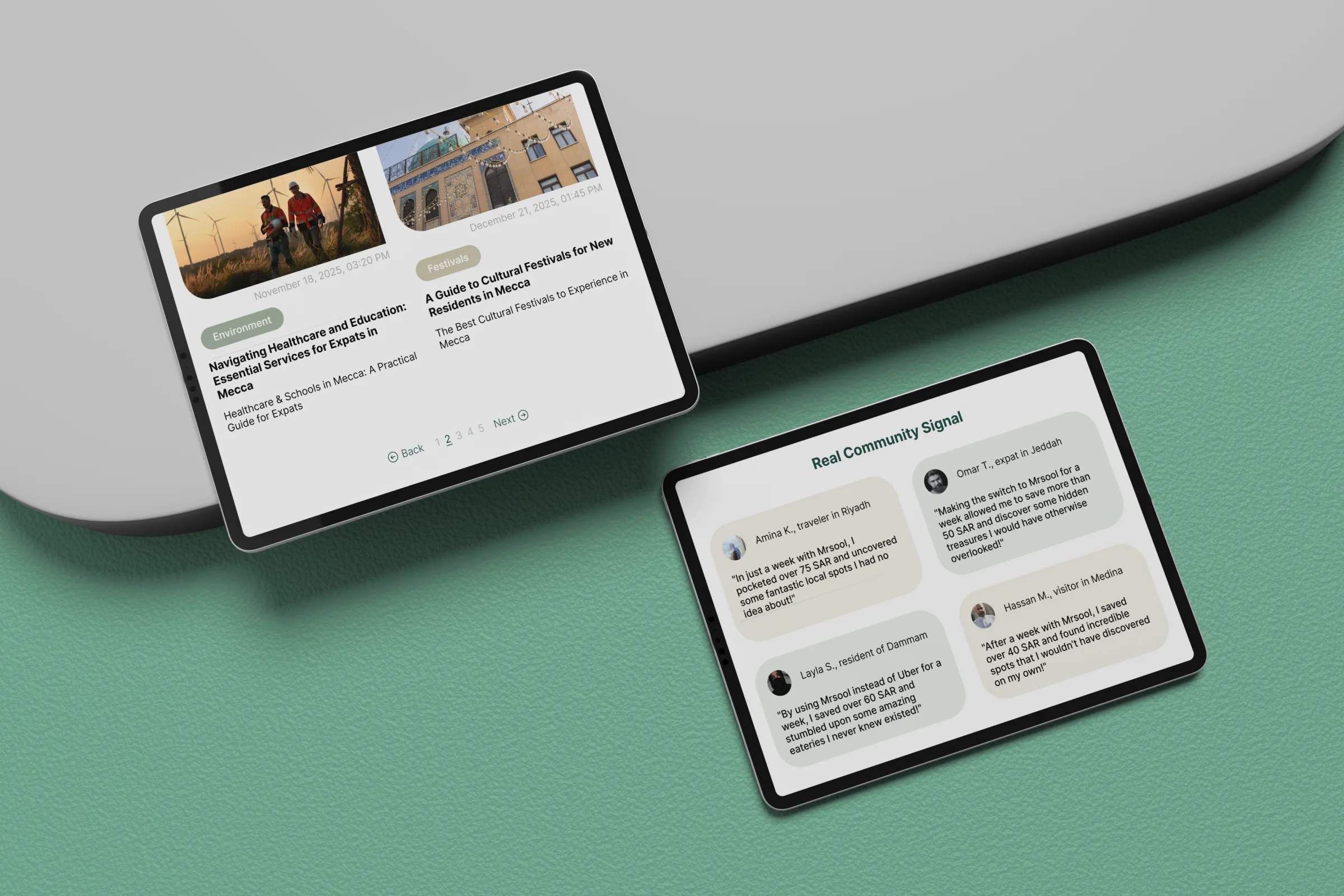
The landing page, library and article experience follow the same logic at every screen size: recognise what is relevant, understand the local context and know what to do next.


My contribution
From information overload to a local pulse that values meaning over volume.
I translated the opportunity into positioning, content architecture, signal hierarchy and a responsive interface system. Because this is a concept project, I am not presenting invented impact figures; the case makes clear which assumptions around relevance, trust and behaviour still need to be tested with real users.