The places are there. The context is not.
Case 03 · Qualitative concept
TareeqiThe route was clear.What lay beyond it wasn’t.
Recurring stories from pilgrims exposed a gap between generic navigation and the local knowledge that gives a journey meaning. Tareeqi turns that qualitative direction into a testable discovery concept.
The 30-second case
Problem. Solution. Next step.
Fewer options at once. More relevance in every choice.
The design makes the opportunity visible. Research must prove the value.
Research layer · qualitative synthesis
Recurring stories became three proto-personas, not false certainty.
These groups synthesise informal experiences shared by several pilgrims. There is no formal sample or validated segmentation, so I use them to direct research and prioritisation.
Qualitative direction · proto-personas · solution not yet testedMeaning seeker
- Situation
- Wants to look beyond the familiar highlights after the rituals.
- Current workaround
- Asks locals and saves scattered recommendations.
- Design consequence
- Curated stories and transparent sourcing.
Family planner
- Situation
- Balances pace, children, older relatives and facilities at once.
- Current workaround
- Combines maps with questions in the group.
- Design consequence
- Family, accessibility and calmness filters.
Independent explorer
- Situation
- Has limited time or connectivity and wants to choose with purpose.
- Current workaround
- Moves between maps, social media and saved links.
- Design consequence
- Intent filters, concise context and offline routes.
The current journey breaks between location and meaning.
A compact problem journey based on recurring stories. The curve is a design hypothesis to be tested in interviews.
- 01 · Free time
There is time to explore
After the rituals, people look for a meaningful place or a calm activity.
- 02 · Map
Familiar results rise to the top
A generic map finds locations but does not understand intent, company or energy.
- 03 · Workaround
Recommendations are scattered
Social posts, saved links and recommendations from others have to be pieced together manually.
- 04 · Doubt
Does this place fit this moment?
Access, crowding and suitability for families or older visitors often remain uncertain.
- 05 · Ask
Local knowledge becomes the way forward
People with local contacts ask around. Others choose the safest option or give up.
The original persona board remains a synthesis tool, not proof that these segments already exist at scale.
0103
The qualitative direction
The route is easy to find. The meaning around it is much harder to uncover.
Recurring stories from several pilgrims revealed the same pattern: maps find locations, but quiet places, local bookshops and practical family knowledge remain scattered across people, posts and chance recommendations.
The places are there. The context is not.
0203
The opportunity
A discovery layer that connects generic maps with local knowledge.
The real gap sits between ‘where is it?’ and ‘why is this place right for me today?’. Tareeqi organises local recommendations around intent, who you are with and how you want to spend your time. A conventional map cannot offer that kind of context.
Not another travel guide. A contextual travel companion.
0303
The solution direction
From searching to finding what fits.
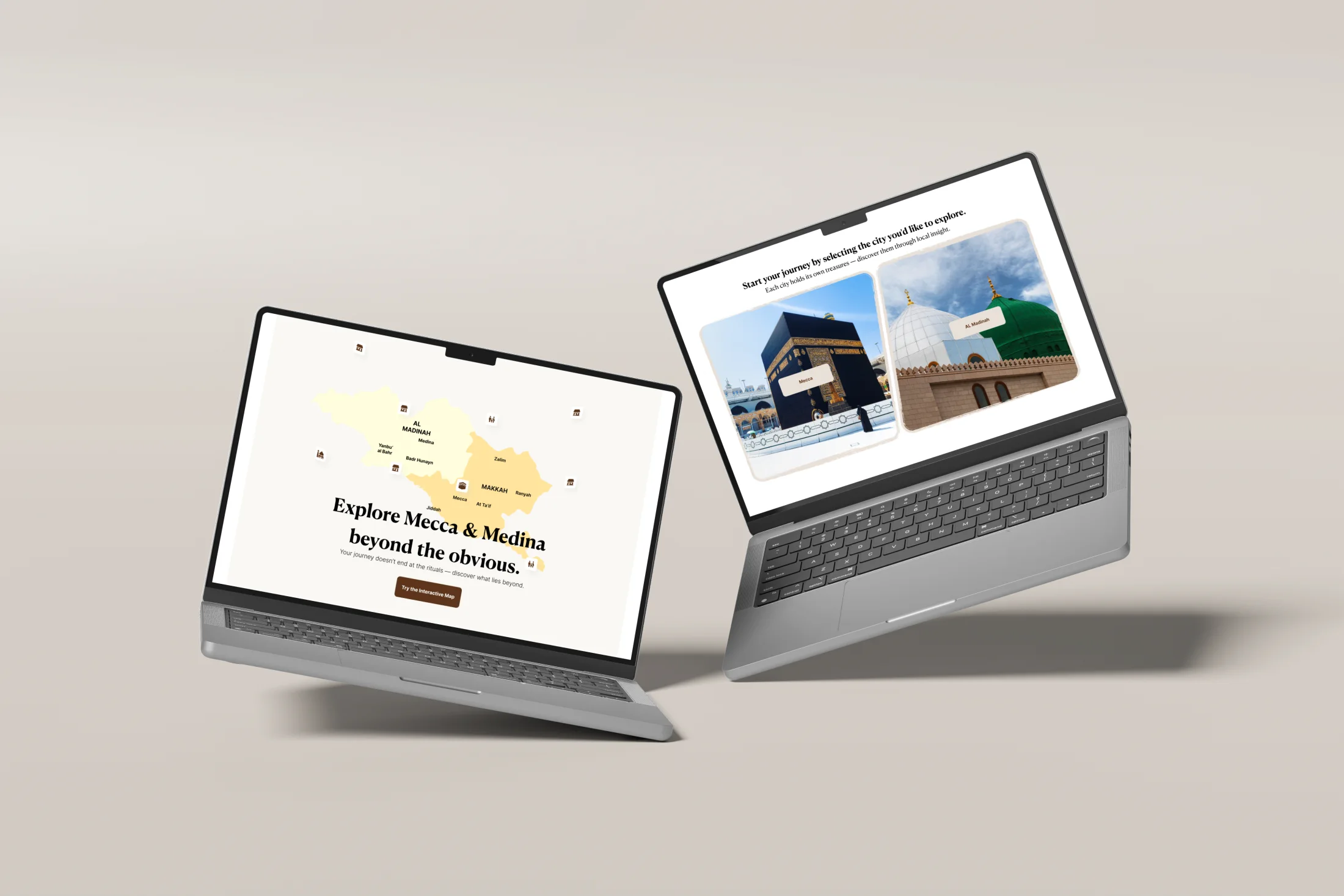
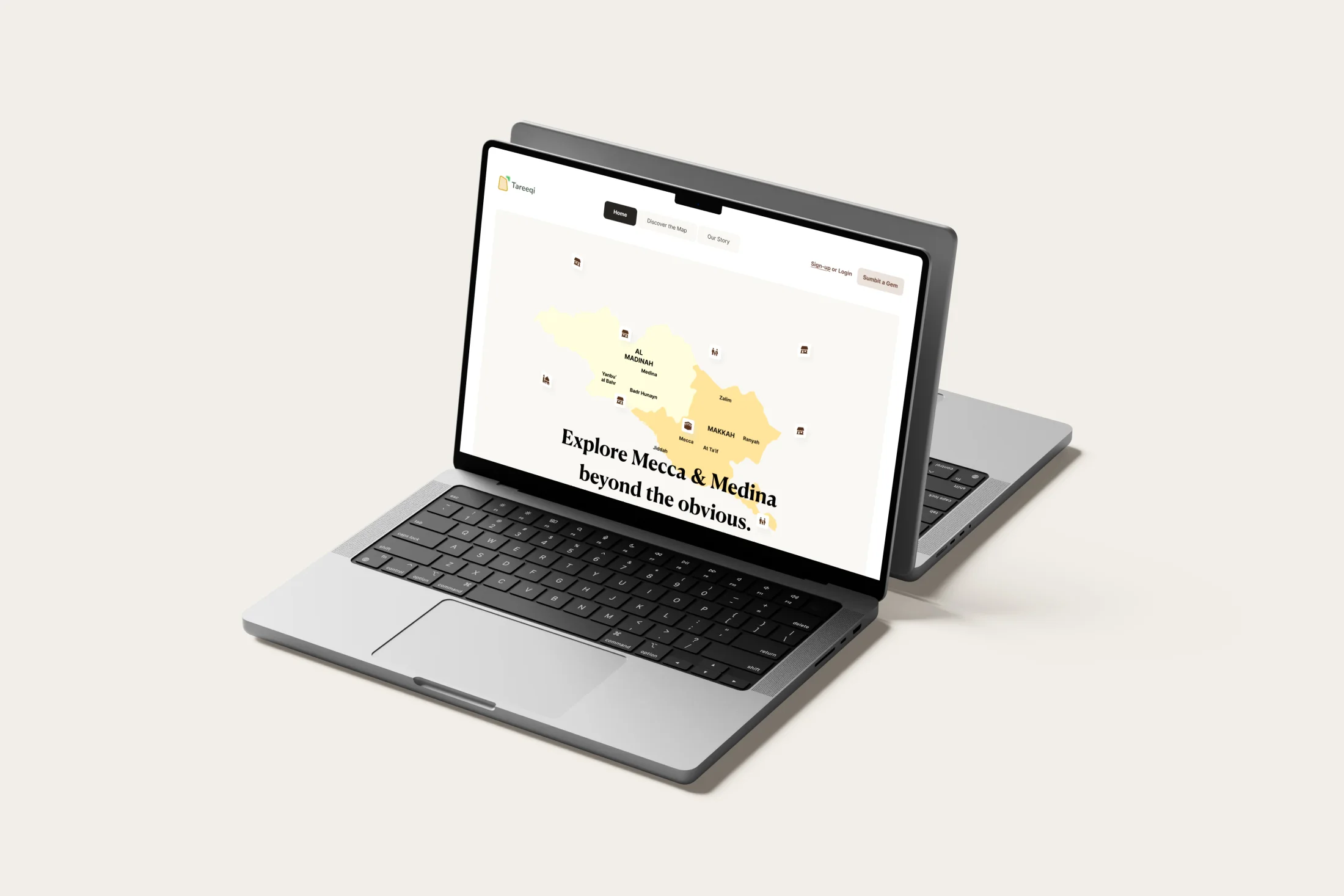
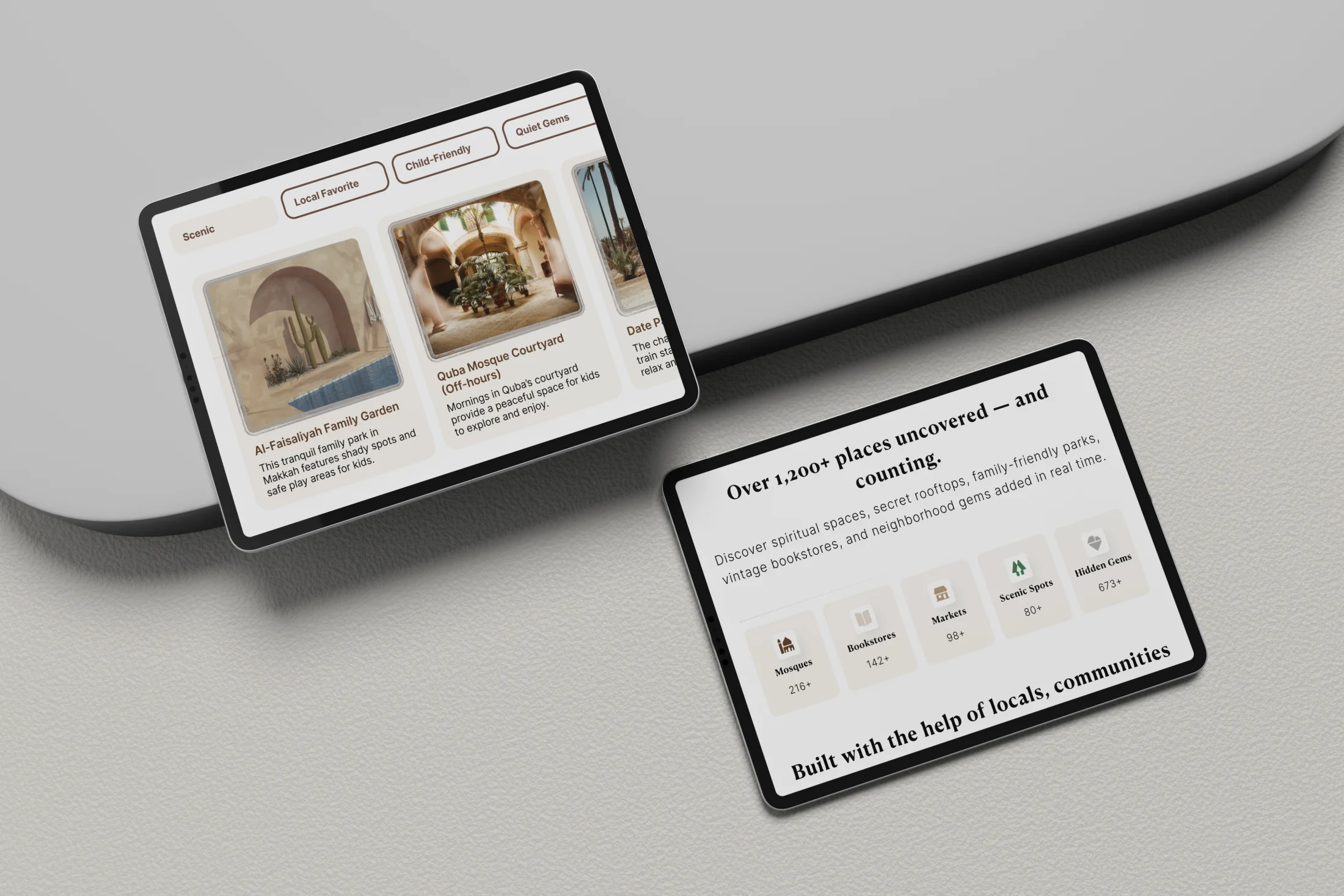
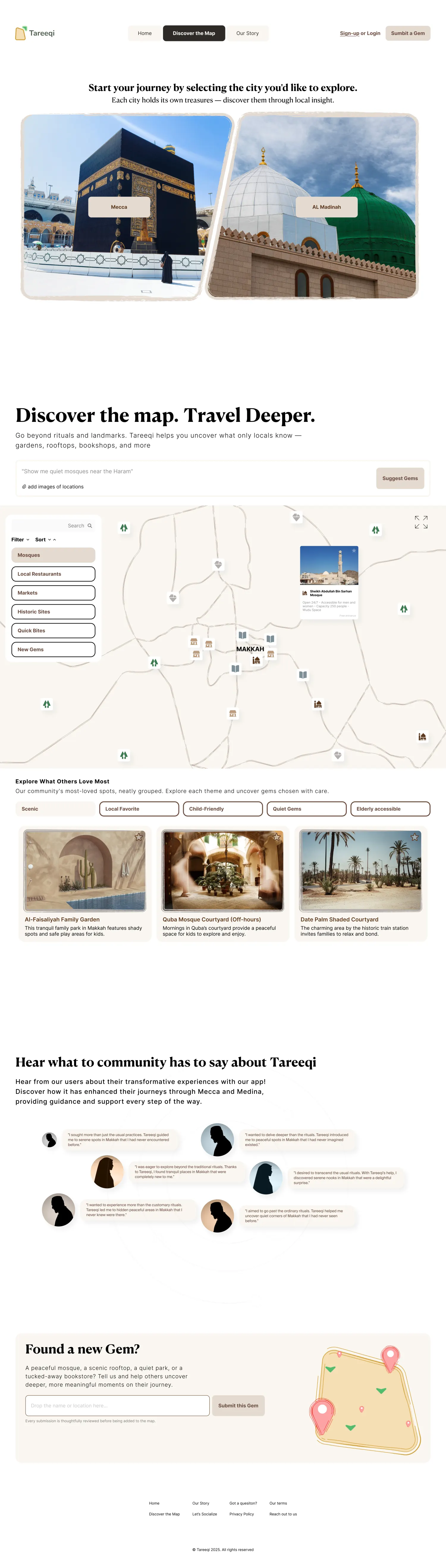
The interactive map combines local favourites with filters such as quiet, child-friendly and hidden gem. Users begin with the experience they need in that moment, not with a long list.
Fewer options at once. More relevance in every choice.
Contextual map Intent filters Local curation
Optional deep diveExplore the decisions behind the solutionOpen this section for the supporting product logic, visual system and validation questions.
Confidence before discovery
Free exploration calls for responsible design.
Offline routes, readable information, filters for families and older visitors, and transparent sourcing make discovery practical even in crowded situations. The community can contribute knowledge, but the system must keep it trustworthy.
Inclusion is not an extra filter here; it is product logic.
The design system
Cultural warmth without visual noise.
An editorial serif gives each story weight, while Inter and Work Sans keep the interface clear and restrained. Generous spacing and a cream base create calm; brown builds trust and green guides discovery and progress.
Let the place speak. The interface does not need to shout.
What still needs to be proven
A strong concept is a testable hypothesis, not an invented success story.
Tareeqi is a self-initiated concept, not a launched product. The next step is to test whether local curation helps people find relevant places faster, whether offline access reduces stress and whether community contributions can be managed responsibly.
The design makes the opportunity visible. Research must prove the value.
Selected screens / easy to review
One system.
Three formats.
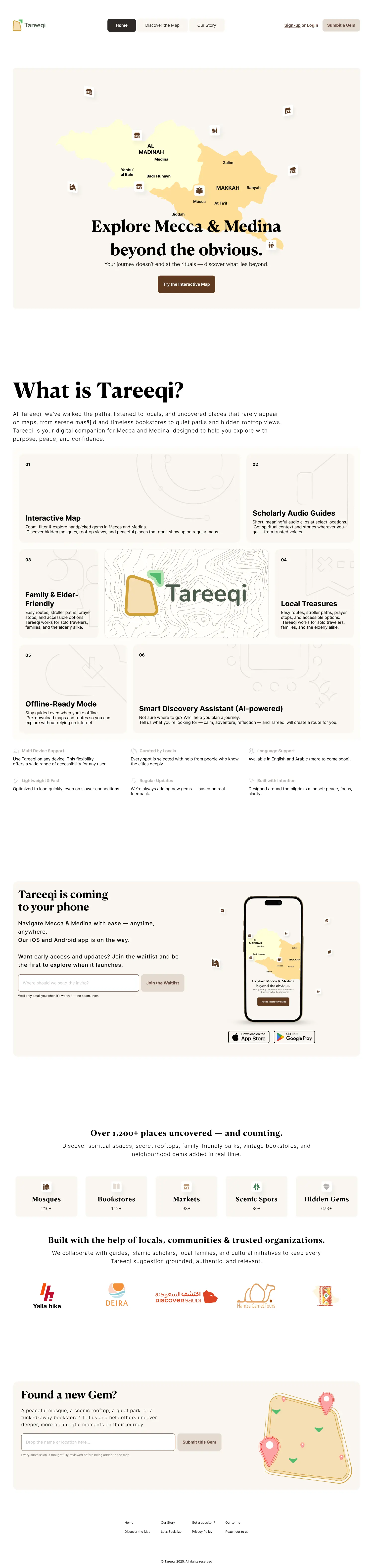
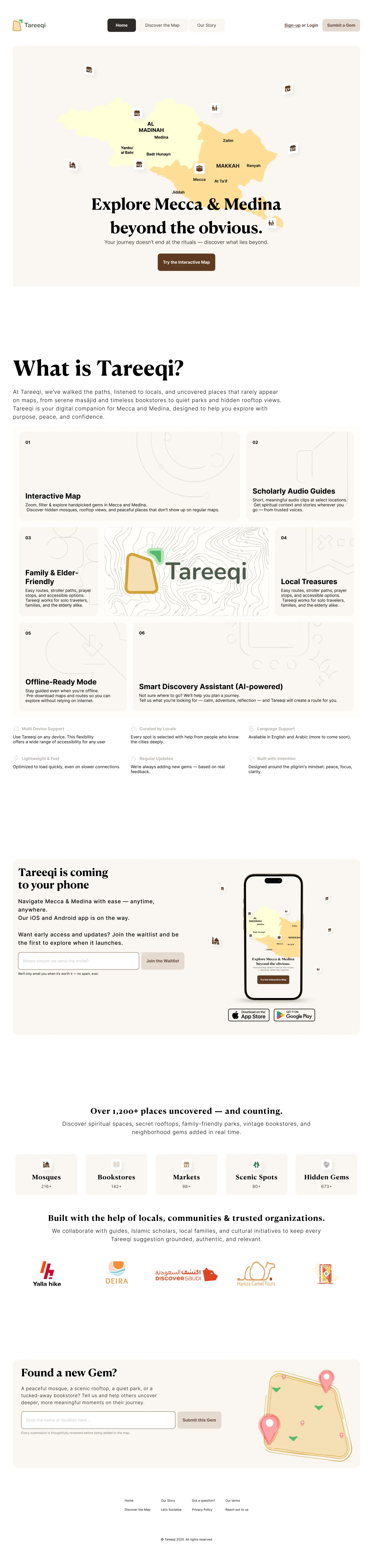
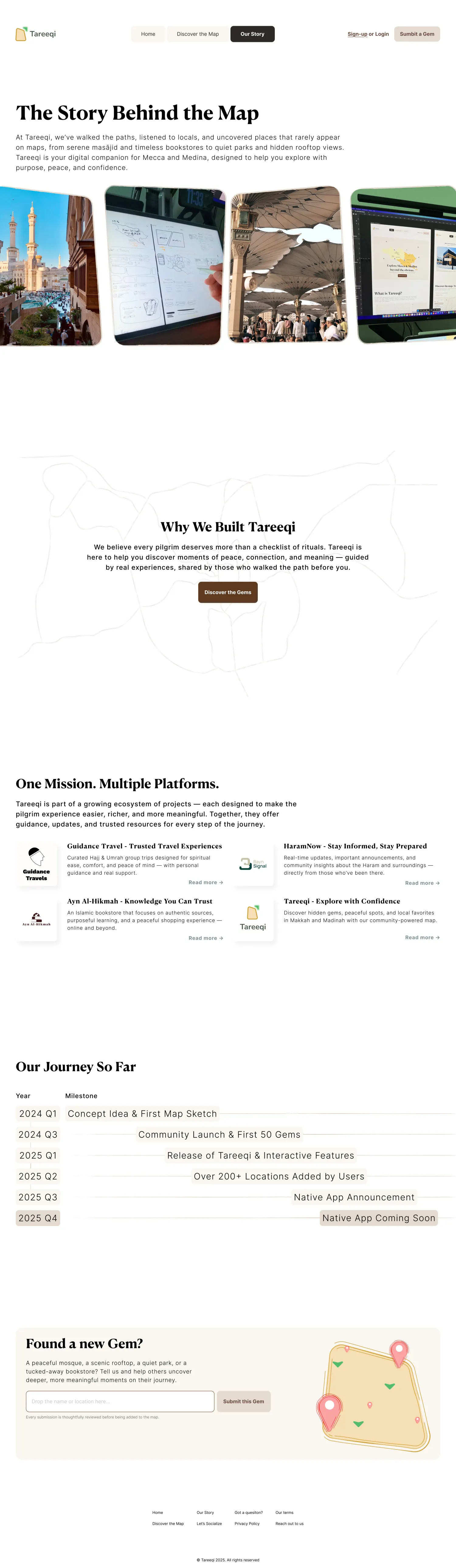
Four defining screens.
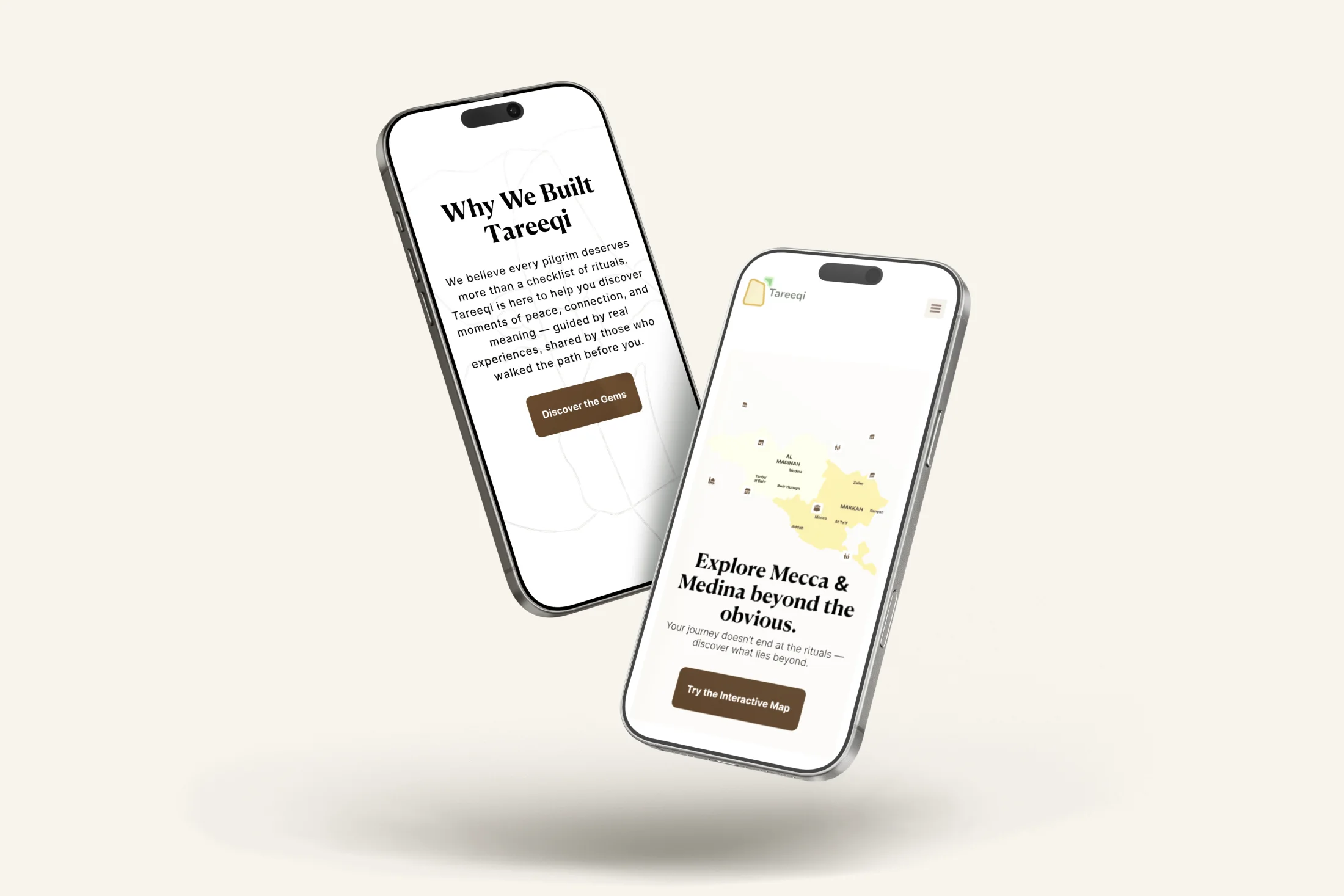
Four representative screens show the core experience. The full exports remain available on request.
My contribution
This was not about proving that I can design an interface. It was about spotting an unmet need and turning it into a system that can be tested.
For me, Tareeqi is strongest where observation, positioning and execution meet. I defined the opportunity, prioritised the core features, designed the responsive system and made the assumptions that still need validation explicit.